One ear looks slightly folded. The other seems to stick out more. Perhaps the upper part looks
unusually curved, smaller than expected, or simply different from the other ear.
For a new parent, noticing something unusual about a baby’s ears can quickly lead to questions.
Will the ear straighten on its own? Could this affect hearing? Is this microtia? Does anything
need to be done now?
There are actually several reasons why a newborn’s outer ear may look different. Some babies
are born with an ear that has developed differently in size or structure. Others have an ear that
is fully formed but has been folded or shaped differently. And some babies have microtia, where
the external ear itself has not fully developed.
These conditions are not interchangeable, and the distinction matters. It can affect whether
hearing needs to be assessed, whether early ear moulding may be considered, and what
follow-up may be appropriate as the child grows.
Key Pointers
- Not every unusual newborn ear shape is microtia.
- Ear differences may be described as deformations, malformations, prominent ears,
constricted ears, or microtia, depending on how the ear has developed. - Many babies with an isolated outer-ear deformation have normal hearing, but hearing
cannot be determined from the appearance of the ear alone. - Microtia may occur together with an absent or narrowed ear canal and can therefore be
associated with hearing loss. - Some newborn ear deformities may be suitable for non-surgical ear moulding when
treatment is started early. - If there is uncertainty about the appearance of your baby’s ear or their hearing, an ENT
assessment can help clarify what type of ear difference is present.
What Is the Difference Between Microtia and an Ear Deformity?
Searching online for images of infant ear differences often leads to an overwhelming mix of
terms, including “deformed ear,” “malformed ear,” “cup ear,” and “microtia.”
Clinicians may use the terms ear deformation and ear malformation somewhat differently. A
useful distinction is whether the ear’s main structures are present but abnormally shaped or
positioned, or whether some structures are underdeveloped or absent.
An ear deformity generally means that the main structures of the outer ear are present but have
an unusual shape.
Microtia is a congenital condition in which the external ear is underdeveloped and may be
considerably smaller or absent. The severity ranges from a mildly small ear with most normal
structures present to severe underdevelopment or complete absence of the external ear
(anotia).
That difference is important because the two conditions may have different implications for
treatment and hearing.
What Is a Newborn Ear Deformity?
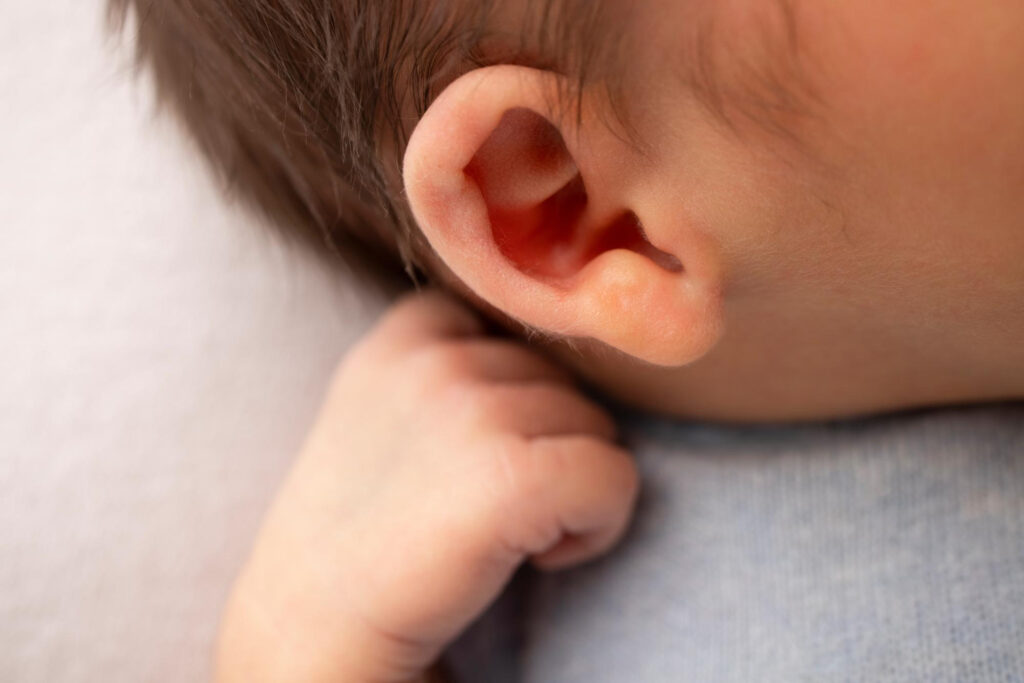
A baby’s ear is remarkably soft at birth. Sometimes all the normal parts of the outer ear, or
pinna, are there, but the cartilage has developed in an unusual position or shape.
This is generally described as an ear deformation.
Parents might notice that the ear:
- Folds over at the top
- Has an unusual curve
- Appears cupped
- Sticks out prominently
- Has additional or unusual folds
The key point is that the ear tissue itself is largely present. It has simply taken on a different
shape.
Because the ear canal and hearing structures may be normal, many children with this type of
outer ear difference hear normally.
What Does It Mean If My Baby Has a Malformed Ear?
“Malformation” sounds similar to “deformation”, but medically there is an important distinction.
With an ear malformation, part of the normal outer ear structure may be underdeveloped or
absent rather than simply folded into a different position.
There are different degrees of malformation, so one baby’s ear may look quite different from
another’s. This is also where distinguishing these conditions from microtia becomes important.
An ENT assessment can help determine which structures are present and whether further
hearing evaluation is needed.
Are Prominent, Cupped or Constricted Ears the Same as Microtia?
No. An ear can look noticeably different without having microtia. For example, some babies are
born with prominent ears, sometimes informally called “bat ears”. The ear may project further
away from the side of the head because of the way its cartilage folds have developed.
A constricted or cup ear may have a tighter or folded appearance around the upper portion of
the ear. These differences involve the shape and position of the pinna and should not
automatically be labelled as microtia.
That distinction is useful for parents because management options can be very different.
What Does Microtia Look Like in a Newborn?
Microtia literally refers to a “small ear”, but the condition involves more than one ear simply
being slightly smaller than the other. In microtia, the external ear has not developed completely
before birth.
Its appearance varies considerably. In milder cases, much of the ear may be present but smaller
or differently formed. In other cases, only a small amount of external ear tissue is present.
Microtia can affect one or both ears, although one-sided microtia is more common.
It may also occur together with aural atresia, where the ear canal is absent or not fully
developed.
Does an Unusual Ear Shape Mean My Baby Has Hearing Loss?
This is understandably one of the first questions parents ask. How the ear looks from the
outside does not always tell us how well a baby can hear. If a baby’s outer ear is differently
shaped but the ear canal, middle ear and inner ear have developed normally, hearing may be
unaffected.
Microtia requires a little more consideration because it may occur together with abnormalities of
the ear canal or middle ear. A newborn hearing screen is an important first step. Depending on
the ear anatomy and the screening result, an audiologist may recommend additional diagnostic
testing or ongoing hearing follow-up.
Why Does Hearing Need to Be Checked Early?
Babies begin listening long before they begin talking. During infancy, the brain is constantly
receiving information from voices and everyday sounds. This access to sound contributes to
later speech and language development.
When an ear difference is noticed at birth, establishing how well each ear hears gives parents
and the child’s care team useful information early on. Depending on the baby’s ear anatomy,
assessment may include specialised hearing tests that do not require the baby to respond
verbally or raise a hand when a sound is heard.
This means hearing can be evaluated even in very young babies.
Can a Newborn Ear Deformity Be Corrected Without Surgery?
This is another reason why identifying the type of ear difference early can matter.
A newborn’s ear cartilage is particularly soft and flexible shortly after birth. For certain newborn
ear deformations, non-surgical ear moulding may be considered. Whether it is appropriate
depends on the specific anatomy. Ear moulding cannot replace external ear structures that are
absent or significantly underdeveloped, as occurs in more substantial forms of microtia.
Systems such as EarWell gently hold the ear cartilage in a more typical position while it is still
pliable.
Timing matters. Ear moulding is most effective when started early, often within the first few
weeks of life. Earlier treatment generally gives a better chance of correction and may shorten
the treatment period. Suitability and results vary according to the type of ear difference and
when treatment begins.
It is important to note that ear moulding is not a treatment for microtia, where ear tissue itself is
underdeveloped or absent.
Will My Baby's Ear Shape Correct Itself as They Grow?
Some minor ear shape differences may become less noticeable with time. However, it can be
difficult to predict which ears will change naturally and which will retain their shape.
Waiting also matters because the window during which newborn ear cartilage is particularly
mouldable is relatively short.
So if parents are concerned about an unusual ear shape, it can be useful to have it assessed
early rather than waiting several months to see what happens.
An assessment does not mean treatment will necessarily be required. It simply helps establish
what type of ear difference is present and what options, if any, are appropriate.
When Should I Bring My Newborn for an ENT Assessment?
You don’t need to know whether the correct term is microtia, malformation, deformation, or
prominent ear before asking for help.
Consider having your baby’s ears assessed if:
- One ear is noticeably smaller than the other
- Part of the outer ear appears absent
- The ear canal appears very narrow or absent
- The upper ear is significantly folded or constricted
- One or both ears project noticeably
- Your baby did not pass their newborn hearing screen
- You have concerns about your baby’s hearing
- You would like to know whether early ear moulding may be suitable
Because some management options are time-sensitive in newborns, early assessment can be
particularly helpful.
Frequently Asked Questions
1. Is every unusually shaped baby ear microtia?
No. Many newborn ear differences are deformations in which the ear structures are present but
shaped differently. Microtia involves underdevelopment of the external ear.
2. Can my baby hear normally with a deformed outer ear?
Often, yes. If the ear canal and internal hearing structures are unaffected, hearing may be
normal. A hearing assessment can confirm how well each ear is functioning.
3. Does microtia always cause hearing loss?
Not always, but microtia may be associated with a narrowed or absent ear canal, which can
cause conductive hearing loss. Hearing assessment is therefore important.
4. When should newborn ear moulding begin?
Ear cartilage is particularly soft during the first weeks after birth, so assessment should be
considered early if parents are interested in ear moulding. Suitability depends on the type of ear
difference and the individual baby.
5. Can EarWell be used for microtia?
Ear moulding systems such as EarWell are intended for suitable newborn ear deformations and
selected malformations. They cannot replace ear tissue that is absent or underdeveloped in
microtia.
Not Sure What You're Seeing? Get An Early Ear Assessment
Parents aren’t expected to look at their newborn’s ear and know whether it is a deformation,
malformation, prominent ear, or microtia.
What matters is identifying the difference accurately, particularly because hearing
considerations and management options are not the same for every condition.
At Dr Lynne Lim Ear Nose Throat & Hearing Centre, newborns and children can be assessed
for congenital outer ear differences, microtia, ear canal abnormalities and associated hearing
concerns.
Where appropriate, assessment may include:
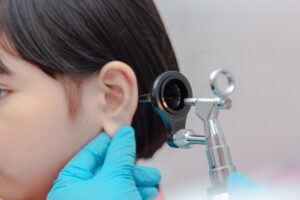
- Examination of the outer ear and ear canal
- Newborn and infant hearing assessment
- Discussion of whether non-surgical ear moulding may be suitable
- EarWell fitting for suitable newborn ear differences
- Ongoing hearing and ENT follow-up where required
- Discussion of hearing rehabilitation options for children with associated hearing loss
If your newborn’s ear looks different and you’re unsure what it means, you do not need to wait
until your baby is older to ask.